Every eCommerce leader recognises the pattern: more ideas and requests than capacity, pressure from multiple stakeholders, and a roadmap that changes weekly.
Good roadmap prioritisation does not eliminate those pressures, but it gives you a clear, defensible way to decide what gets done when—across features, technical debt, and operational work.
Common roadmap pitfalls in eCommerce
Typical anti-patterns include:
- Roadmaps becoming backlog dumps rather than coherent strategies
- Technical debt never quite making the cut until a crisis hits
- Retail calendars and peak periods not properly reflected in delivery planning
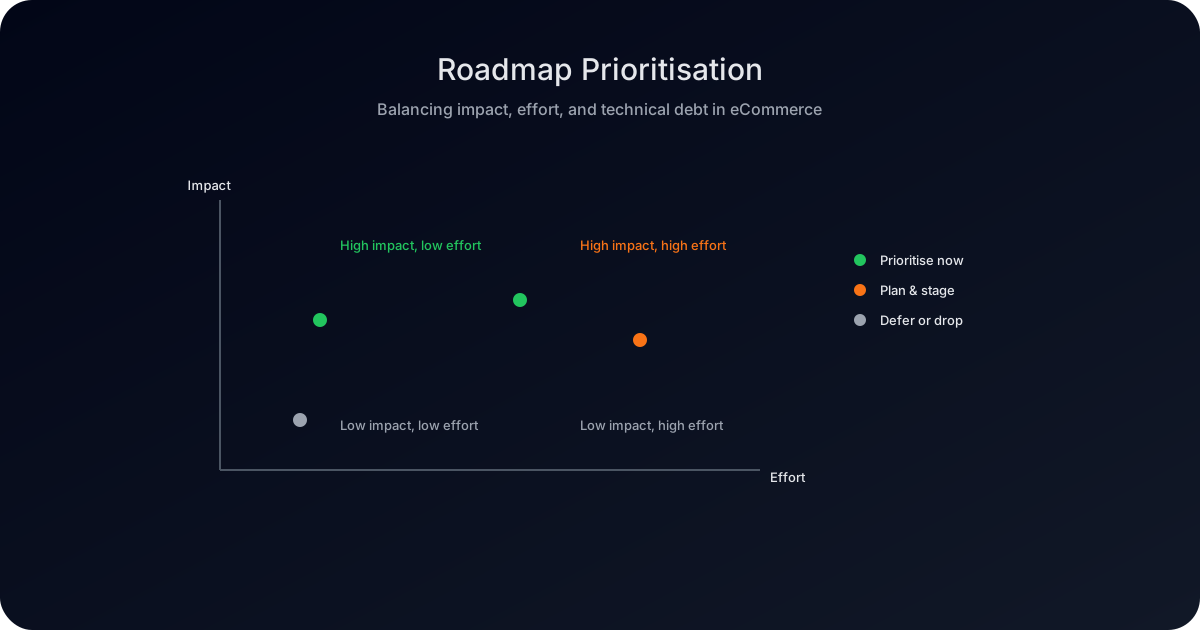
Impact vs. effort with real metrics
Impact vs. effort is a simple and powerful framing when grounded in real data:
- Impact – expected movement in metrics such as conversion, AOV, LTV, cost to serve, or operational efficiency
- Effort – delivery cost in time, complexity, risk, and opportunity cost
Structuring initiatives with basic scoring (e.g. RICE: Reach, Impact, Confidence, Effort) helps make trade-offs explicit, even if scores are imperfect.
Making space for technical debt
In eCommerce, platform and technical work are often the difference between scaling smoothly and firefighting during peak. To avoid “we’ll fix it later” traps:
- Allocate a fixed percentage of capacity (e.g. 20–30%) to platform and technical debt work
- Have engineering identify and rank debt that constrains features or performance
- Treat high-impact technical initiatives as first-class roadmap items, not side tasks
Respecting retail cycles and operations
Unlike many SaaS products, eCommerce operates around retail calendars: peak periods, promotions, and seasonality. Roadmaps need to reflect that reality:
- Plan major launches well ahead of peak; freeze risky changes close to critical dates
- Reserve capacity for unplanned work (e.g. supplier changes, regulatory updates)
- Coordinate tightly with trading, marketing, and operations on timelines and dependencies
Governance and communication
Even the best priorities fail without clear communication. Effective teams:
- Maintain a single, visible roadmap that is updated regularly
- Explain why certain initiatives are in or out for a given period
- Review progress and adjust based on data and learning, not just noise or opinions
How Rely Tech Serve helps with eCommerce roadmaps
Rely Tech Serve supports product and digital leaders to:
- Clarify strategic priorities and metrics for the roadmap
- Set up practical prioritisation and capacity planning processes
- Integrate retail calendars and platform work into delivery plans
If your roadmap feels reactive or overloaded, get in touch or explore our product strategy and delivery consulting services.
FAQs: Roadmap Prioritisation for eCommerce
How far ahead should an eCommerce roadmap go?
Many teams work well with a 3–6 month committed view and a longer-term directional view (12–18 months) that is intentionally flexible.
How do we handle urgent requests?
Reserve some capacity for unplanned work and have a clear process for trade-offs when urgent items arise—what will move out if this comes in?
Who owns the roadmap?
Product usually owns the roadmap, but it should be co-created with engineering, design, and commercial stakeholders to avoid surprises and misalignment.