Product content is one of the most time-consuming parts of running an eCommerce business—especially when you have thousands of SKUs, frequent range changes, and multiple channels to support.
Generative AI offers a way to scale product descriptions, category copy, and campaign content, while still protecting brand voice, accuracy, and SEO—if implemented thoughtfully.
Where generative AI helps most
We typically see value in:
- First drafts of product descriptions based on structured attributes and brand guidelines
- Variant copy – size, colour, or regional variations where structure is similar
- Category and landing page copy that needs to be refreshed regularly
- Marketing variants – testing different angles for email, ads, and on-site messaging
Designing a safe content workflow
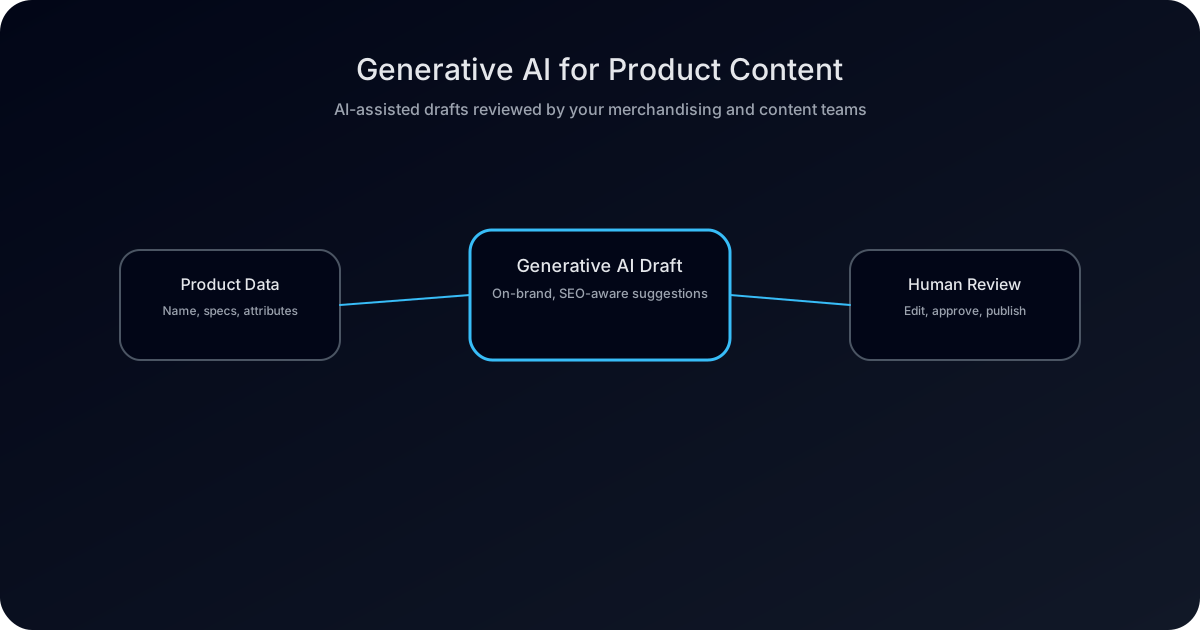
A robust generative AI workflow usually looks like:
- Input: structured product data (name, brand, specs), target audience, keywords, and examples of on-brand copy.
- Generation: the model produces one or more candidate descriptions or snippets.
- Human review: merchandisers or copywriters review, edit, and approve.
- Publication and tracking: approved content is pushed to channels and performance is monitored.
The human review stage is critical. It ensures factual accuracy, legal compliance, and fit with your brand voice.
Protecting brand voice and quality
Your goal is not to produce generic copy faster, but to produce high-quality, on-brand content at scale. To do that:
- Provide the model with examples of strong, on-brand copy from your site.
- Use structured prompts or templates that specify tone, structure, and required elements.
- Define clear guidelines for what is and is not acceptable—for example, claims requiring regulatory review.
SEO and structured data considerations
Generative AI can help incorporate relevant keywords naturally and avoid duplication across similar SKUs, but there are risks if misused.
Good practice includes:
- Ensuring each product has unique, valuable copy, not just templated synonyms.
- Using headings, bullet points, and schema markup (e.g. Product, FAQ) where appropriate.
- Avoiding keyword stuffing or writing for search engines at the expense of clarity.
- Monitoring rankings, organic traffic, and conversion after large-scale content changes.
Governance and risk
Generative AI content introduces governance questions:
- Who is accountable if a description is misleading or non-compliant?
- How do you prevent unapproved claims or sensitive terms from appearing?
- How do you track which content was AI-assisted vs. fully human-written?
Answering these questions is part of making generative AI a sustainable capability rather than a one-off experiment.
How Rely Tech Serve supports content at scale
Rely Tech Serve helps eCommerce teams integrate generative AI into their content operations by:
- Designing content workflows and guardrails that fit your organisation
- Integrating AI capabilities with your PIM, CMS, and commerce platforms
- Supporting SEO and measurement so you know what is working
If you are exploring generative AI for product content, get in touch or see our AI and content strategy services.
FAQs: Generative AI for Product Content
Can we trust AI to write product descriptions without review?
No. For most retailers, unsupervised AI content is too risky. Human review is essential for accuracy, compliance, and brand voice.
Will AI-generated content hurt our SEO?
It can, if used poorly. Search engines reward content that is useful, unique, and user-focused. With the right process and quality controls, generative AI can support, not harm, your SEO strategy.
How do we decide where to start?
Many teams begin with long-tail or lower-priority SKUs where content coverage is thin, or with internal first-draft generation that writers refine before publishing.