Most product and engineering leaders have experienced this: a feature is marked as “done” in one system, still in test in another, and not yet live in production. Deadlines slip, stakeholders are confused, and teams are frustrated.
The root cause is often simple—teams do not share the same Definition of Done (DoD). Fixing it is one of the highest-leverage process changes a product organisation can make.
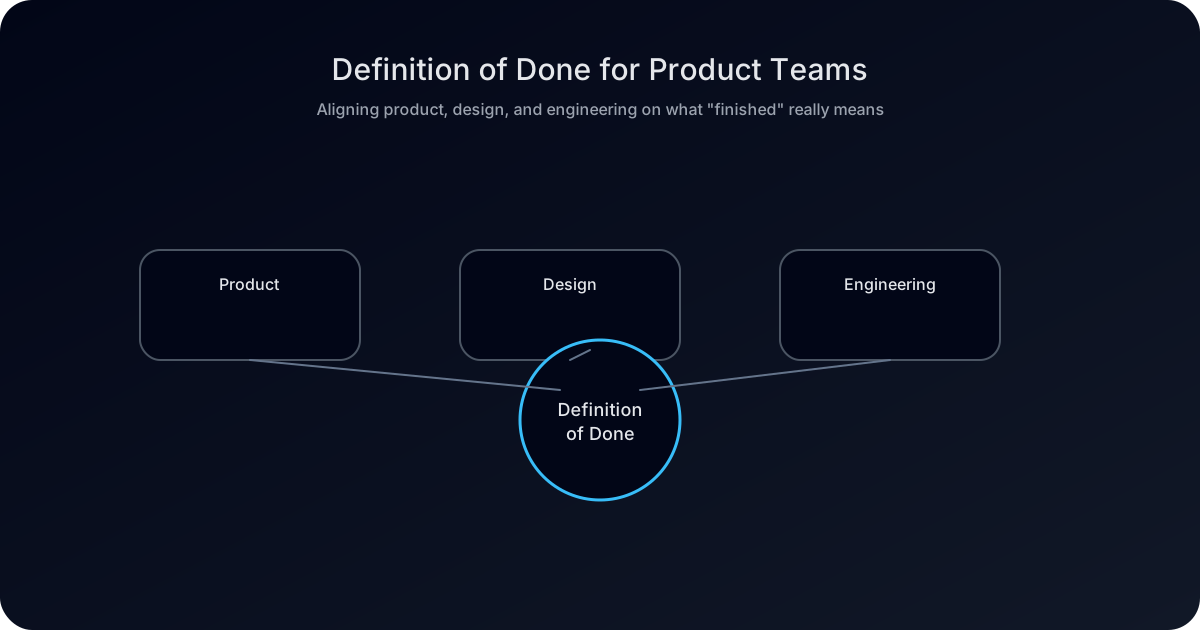
Why Definition of Done matters
Without a shared Definition of Done:
- Engineering may consider work done when code is merged—but not yet tested or deployed.
- Design may treat a feature as done once handoff is complete—regardless of implementation.
- Product may assume “in review” means “nearly shipped”—even if there are major issues.
The result is inconsistent signals, missed expectations, and difficulty answering basic questions like “can we ship this before peak?”
Designing a useful Definition of Done
A good Definition of Done is:
- Specific – concrete criteria, not vague statements
- Shared – understood and agreed by product, engineering, design, and QA
- Practical – fits your context; not a wish-list of everything that could be nice to have
Typical elements include:
- Code is reviewed, tested, and merged into a releasable branch
- Automated tests updated or added as needed
- Analytics events implemented and documented
- Feature flags or rollout plans defined
- Relevant documentation and support materials updated
Making DoD real in day-to-day work
To avoid DoD becoming a poster on the wall:
- Attach it directly to your workflow states in your delivery tool (e.g. what must be true to move to “Done”).
- Use it in planning and estimation so teams factor in testing, analytics, and rollout work.
- Review edge cases in retrospectives where something was marked done but caused surprises.
Signals for leaders
As a product or engineering leader, you know Definition of Done needs attention when:
- Stakeholders regularly ask “is it live yet?” and get different answers.
- Features technically “shipped” but are not being used or measured.
- Teams over-commit because they underestimate non-coding work.
How Rely Tech Serve can help
Rely Tech Serve helps digital and product teams establish practical, effective Definitions of Done by:
- Reviewing current delivery practices and tools
- Facilitating cross-functional workshops to agree clear criteria
- Embedding DoD into roadmaps, estimation, and reporting
If you are seeing slippage or confusion around what “done” really means in your organisation, contact us or explore our product and delivery consulting services.
FAQs: Definition of Done for Product Teams
Should each team have its own Definition of Done?
A baseline DoD should be consistent across teams, with room for team-specific additions where necessary (e.g. specialised compliance steps).
How often should we revisit our DoD?
Revisit it when your delivery process or architecture changes, or when recurring issues suggest gaps (e.g. missing analytics, rollout problems).
Is this only relevant for Agile teams?
No. Any team that builds and ships software benefits from a clear, shared understanding of when work is truly finished.