AI is rapidly becoming part of the eCommerce stack: powering search, recommendations, chatbots, and now agentic commerce. With that comes a new class of security and governance risks that traditional controls do not fully cover.
For CTOs, CISOs, and digital leaders, the goal is clear: unlock AI-driven value without introducing unacceptable risk to customer data, payments, and brand trust.
Why AI Security in eCommerce Is Different
Traditional security models focus on protecting systems and data from direct access. AI introduces additional pathways where:
- Models can be influenced through content (reviews, messages, product data)
- Agents may act on behalf of users with delegated permissions
- External APIs and models may process sensitive or commercially valuable data
This means that even if your infrastructure is “locked down”, AI features can still be coerced into unsafe or unintended behaviour.
Key AI Security Risks for Merchants
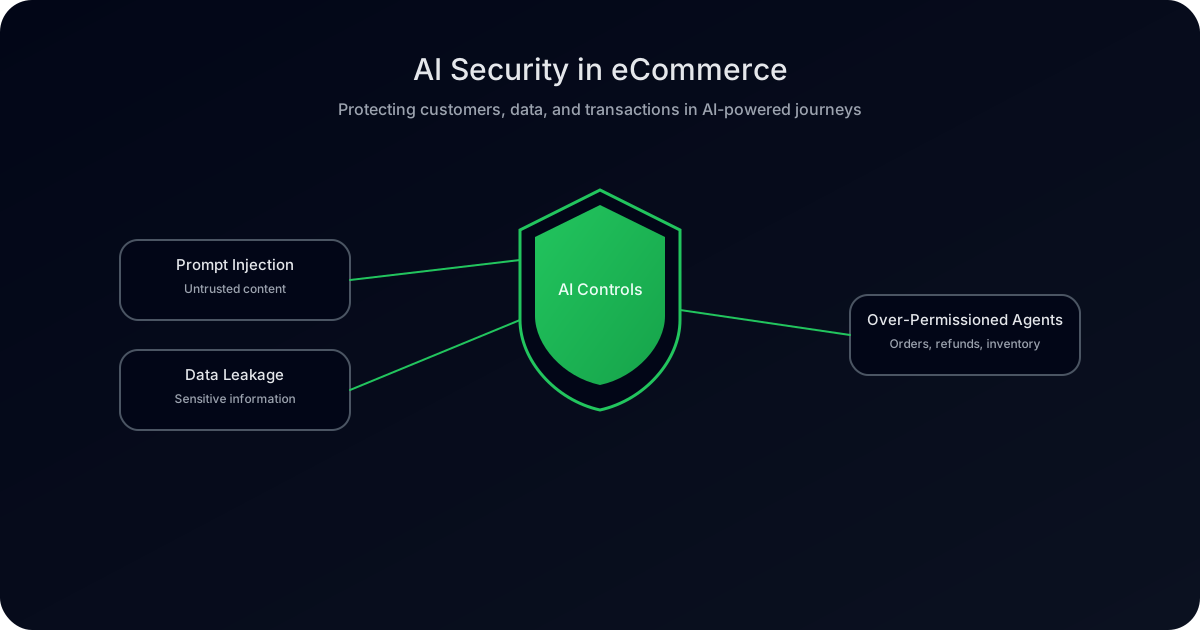
1. Prompt injection and model manipulation
Prompt injection occurs when an attacker embeds malicious instructions in content that your AI system processes. In eCommerce this could be:
- Product reviews or Q&A content
- Chat messages or support tickets
- Data ingested from third-party feeds or marketplaces
- Even internal documentation or knowledge bases
If not properly separated and sanitised, an LLM might treat this content as instructions, causing it to leak data, override rules, or call downstream systems in unsafe ways.
Mitigations include:
- Separating system instructions, tools, and untrusted content in your prompts
- Normalising and sanitising user-generated content before use
- Implementing allow-lists and policy checks on what actions AI components are permitted to trigger
2. Data leakage and privacy exposure
When AI systems are trained on, or have access to, sensitive data (customer PII, pricing, supply terms), there is a risk that:
- Data is stored or logged outside your control (e.g. third-party APIs)
- Models may surface memorised examples if not properly configured
- Responses inadvertently reveal more information than intended
Practical steps include:
- Defining clear data classification and what is allowed to be sent to external providers
- Using tokenisation, anonymisation, or aggregation before passing data to models
- Preferring enterprise-grade or private deployments for high-sensitivity workloads
3. Over-permissioned agents and automation
As you move from simple chat experiences to agentic systems that can modify orders, issue refunds, or change customer details, permission models become critical.
Over-permissioned agents can:
- Issue refunds or credits outside policy
- Modify inventory or prices incorrectly
- Trigger actions that have regulatory implications (e.g. tax, export)
Mitigations include strict scoping of tools and actions, rate limits, and human-in-the-loop approval for high-risk operations.
Governance and Operating Model
AI security is not just a technical problem. It needs an operating model that spans product, engineering, security, legal, and operations.
Foundational practices include:
- Establishing an AI risk register and reviewing it alongside other technology risks
- Defining approval and review processes for launching new AI-powered features
- Monitoring for unexpected model behaviour and user abuse patterns
- Running red-teaming exercises focused specifically on AI components
How Rely Tech Serve Helps with AI Security
Rely Tech Serve supports retailers and marketplaces in adopting AI safely by:
- Assessing existing and planned AI use cases for security and compliance risk
- Designing secure prompt, tool, and data architectures for LLM-powered systems
- Embedding governance and monitoring into your AI roadmap and delivery processes
If you are planning AI initiatives and want to ensure security is designed-in rather than retrofitted, contact us or explore our AI security and technology consulting services.
FAQs: AI Security in eCommerce
Is AI security only a concern for public-facing chatbots?
No. Internal tools, search, recommendations, and back-office automations that use AI can all introduce risk if they connect to sensitive data or powerful internal systems.
Who should own AI security internally?
Typically, AI security is a joint responsibility between security / risk functions and the teams building AI capabilities. Many organisations establish a small cross-functional group to own standards and patterns.
Do we need to pause AI projects until security is solved?
Not necessarily. It is usually better to start with constrained pilots that incorporate security and governance from the beginning, rather than bolt controls on afterwards.