Inventory is one of the biggest, and most visible, levers on retail profitability. Too little stock and you lose sales; too much and you lock up cash, discount heavily, and increase write-offs.
AI-driven inventory optimisation and demand forecasting help retailers strike a better balance across products, locations, and channels—especially in volatile markets.
Why inventory optimisation is hard
Even with strong merchandising and planning teams, traditional approaches struggle with:
- Volatile demand – promotions, macro factors, and changing consumer behaviour
- Long and variable lead times – especially across global supply chains
- Channel complexity – web, app, marketplaces, stores, and wholesale drawing from shared pools
Spreadsheets and simple rules do not scale when you have thousands of SKUs, multiple locations, and dynamic pricing or promotions.
AI-powered demand forecasting
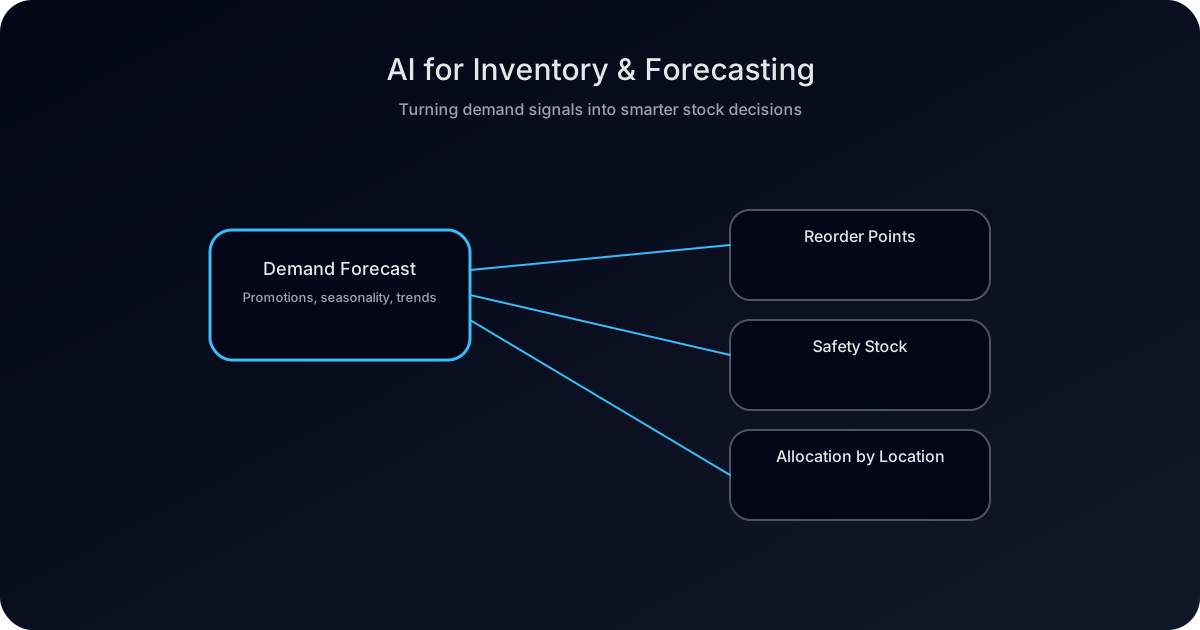
Machine learning-based forecasting models typically improve accuracy by incorporating more signals than traditional methods, such as:
- Promotion calendars and price changes
- Weather, events, and seasonality
- Device, channel, and traffic sources
- Macro or category-level trends
Models can be tailored by product type (e.g. fashion vs. FMCG) and geography. In practice, the goal is not perfection; it is to reduce forecast error enough to materially improve replenishment decisions.
Reorder points and safety stock
With better forecasts, AI systems can help optimise:
- Reorder points – when to trigger replenishment, by SKU and location
- Safety stock – buffer inventory to protect against variability in demand and lead time
- Order quantities – balancing ordering cost, holding cost, and service levels
The result is fewer painful stockouts and less capital tied up in excess inventory, often with measurable gains in margin and cash flow.
Multi-location and omnichannel constraints
For retailers with multiple warehouses and stores, optimisation extends to where you hold stock:
- Allocating inventory across DCs and stores
- Supporting click-and-collect and ship-from-store without starving key locations
- Respecting channel priorities and service level agreements
AI models can evaluate trade-offs between transport cost, fulfilment time, and lost sales across scenarios—something humans can do for a handful of SKUs, but not at full assortment scale.
Data and organisation considerations
Successful AI inventory projects depend on:
- Clean, consistent sales and inventory history
- Reliable master data (SKUs, hierarchies, locations, lead times)
- Clear ownership between planning, merchandising, and operations teams
Equally important is change management: planners and buyers need to trust and understand the recommendations, not feel replaced by a “black box”. The most effective implementations pair planners with AI tools, not the other way around.
How Rely Tech Serve can help
Rely Tech Serve supports retailers and brands in applying AI to inventory and demand challenges by:
- Assessing data readiness and planning processes
- Defining forecasting and replenishment use cases tied to business goals
- Designing and implementing machine learning models and decision tools
- Embedding these into day-to-day planning and supply workflows
If you want to explore how AI could improve your inventory performance, contact us or explore our data and analytics consulting services.
FAQs: AI for Inventory Optimisation
Do we need perfect data to start?
No. Almost every retailer has data quality issues. The key is to understand where they are, address critical gaps, and design models that are robust to some noise.
How quickly can we see benefits?
Pilots focused on specific categories or regions can often demonstrate improvements in forecast accuracy and stock metrics within a few replenishment cycles.
Will AI replace our planning team?
In practice, AI works best as a decision support tool. Your teams still make decisions, but with better insight and scenario analysis. Most organisations see planners become more strategic, not redundant.