Customer service is an obvious candidate for AI: repetitive questions, structured processes, and high labour costs. But poorly designed automation can damage loyalty and create more work downstream.
The most effective organisations use AI customer service automation to handle the right kinds of queries while making it easy to reach a human when needed.
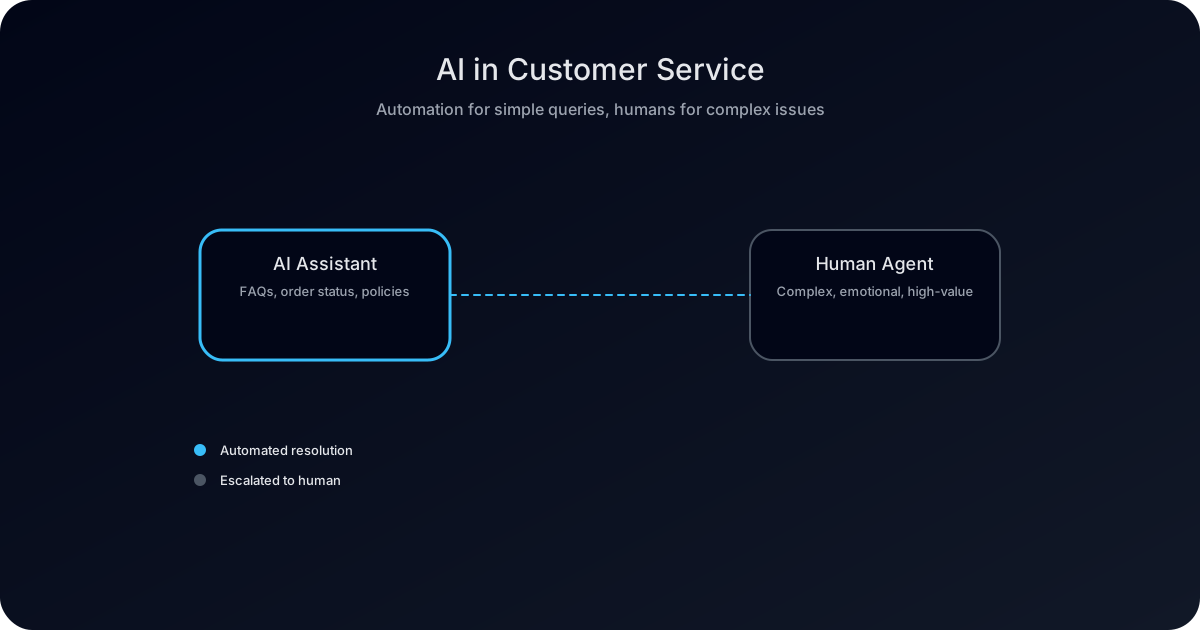
What to automate vs. when to escalate
Good candidates for automation include:
- Order status and delivery tracking
- Returns and exchange policy questions
- Simple product or account queries that rely on existing knowledge
Issues that should usually escalate quickly to humans include:
- Complaints or disputes about service quality
- Complex product or configuration questions with high stakes
- Cases involving vulnerable customers or sensitive topics
Designing AI-powered support flows
Rather than putting a single chatbot in front of everything, consider:
- Automated self-service for known, repetitive tasks (returns, order tracking)
- LLM-powered assistants that can interpret free text and route or answer appropriately
- Agent assist tools that help human agents respond faster with suggested replies and next steps
In all three cases, grounding responses in your real data—orders, policies, product content—is essential.
Measuring the right outcomes
Success metrics for AI in customer service should balance efficiency and experience:
- Resolution rate and time to resolution
- Customer satisfaction (CSAT or NPS) by channel and automation level
- Downstream impact – do unresolved issues lead to more contacts or churn?
Focusing solely on deflection can encourage patterns that save short-term cost but erode long-term loyalty.
How Rely Tech Serve supports AI-powered service
Rely Tech Serve works with support and digital teams to:
- Identify high-value automation opportunities across service journeys
- Design LLM-backed assistants and workflows integrated with your systems
- Implement agent-assist tools that reduce handle time and improve consistency
- Establish metrics and governance for ongoing optimisation
If you are rethinking how AI fits into your customer service strategy, contact us or explore our AI and operations consulting.
FAQs: AI in Customer Service
Will AI replace our support team?
In practice, AI tends to change the shape of work rather than eliminate it. Teams handle fewer repetitive contacts and focus more on complex, high-value interactions.
Where should we start?
Start with one or two common, low-risk tasks—such as order tracking or basic returns questions—and expand once you have solid performance and governance in place.
How do we avoid frustrating customers?
Always provide a clear and easy path to a human, especially when customers express dissatisfaction or when the AI is uncertain about the answer.